How to Choose the Best Office Blinds for Your WorkplaceBest Office Blinds for Your WorkplaceChoosing the best blinds for your office will help control the light coming into your office…
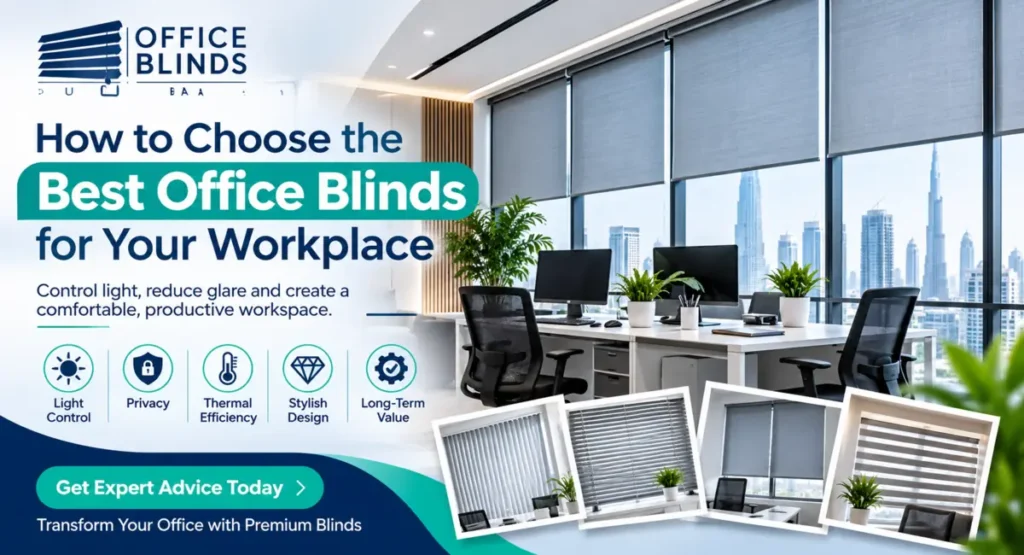

Choosing the best blinds for your office will help control the light coming into your office and reduce glare from your computer screens. Choosing the correct blinds for your windows will help increase the comfort and usability of your workspace. When there is a lot of sunlight coming through your windows it can be tricky to read your computer screens. Having windows that aren’t covered can cause some parts of your office to become extremely uncomfortable due to the high temperatures. Choosing the best blinds for your office will help solve these everyday issues and keep your workspace looking clean and professional.
There are many options to choose from, from roller blinds to large vertical blinds. Think about how big your windows are, how long you work throughout the day, and how much maintenance you want to do. Choosing the right blind will mean that your workplace is well looked after and won’t need constant fixing or replacing.
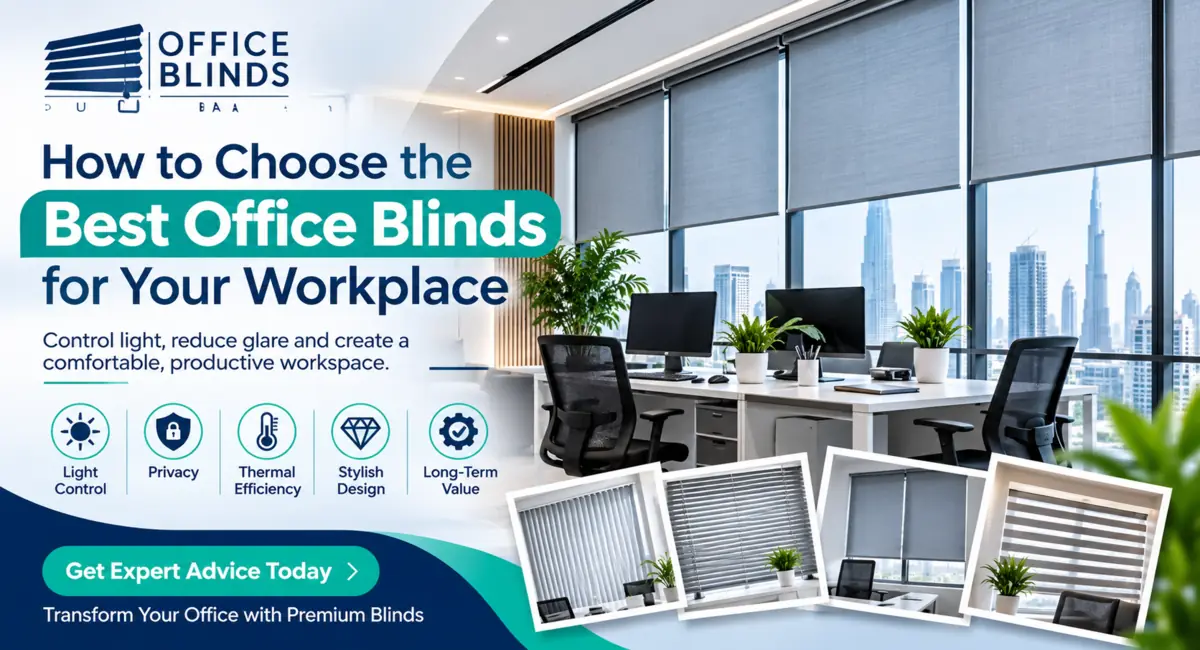
Improve your working environment by choosing blinds to match your window and interior design. Compare different styles and fabric samples to choose an option that will provide you with excellent light and privacy. Decide what is most important for your office.
Before purchasing office blinds it is important to understand how your windows impact your employees throughout their working day. The amount of sunlight, temperature and the interior design will all have an impact on what blinds would be best for your office. Installation needs, operating systems as well as long term maintenance costs should also be taken into consideration. Understanding these will help ensure you select blinds that fit your office layout, whilst ensuring your employees are comfortable and providing a long term investment.
The main factors to consider include:
Ensure that blinds in your office provide sufficient natural light but do not cause problems viewing screens. Too much direct sunlight can cause glare and cause discomfort to staff. Roller blinds using light filtering or blackout fabric can be used to control the amount of light entering the room. If there are varying amounts of daylight, having adjustable blinds can be very beneficial. It’s also worth considering what direction your windows face as those facing east and west will need more protection against glare.
Meeting Rooms, Executive Rooms, Reception Areas and any areas that are likely to have confidential information will require some level of privacy. Blinds can be used in these areas to help keep your office looking professional while preventing uninvited sights from peering in. Blackout and room darkening blinds will give you more privacy, whilst light filtering fabric will let in some natural light. If your office is a shared working space then think about how much privacy you actually need. Using different blinds in different rooms can help you get the best results.
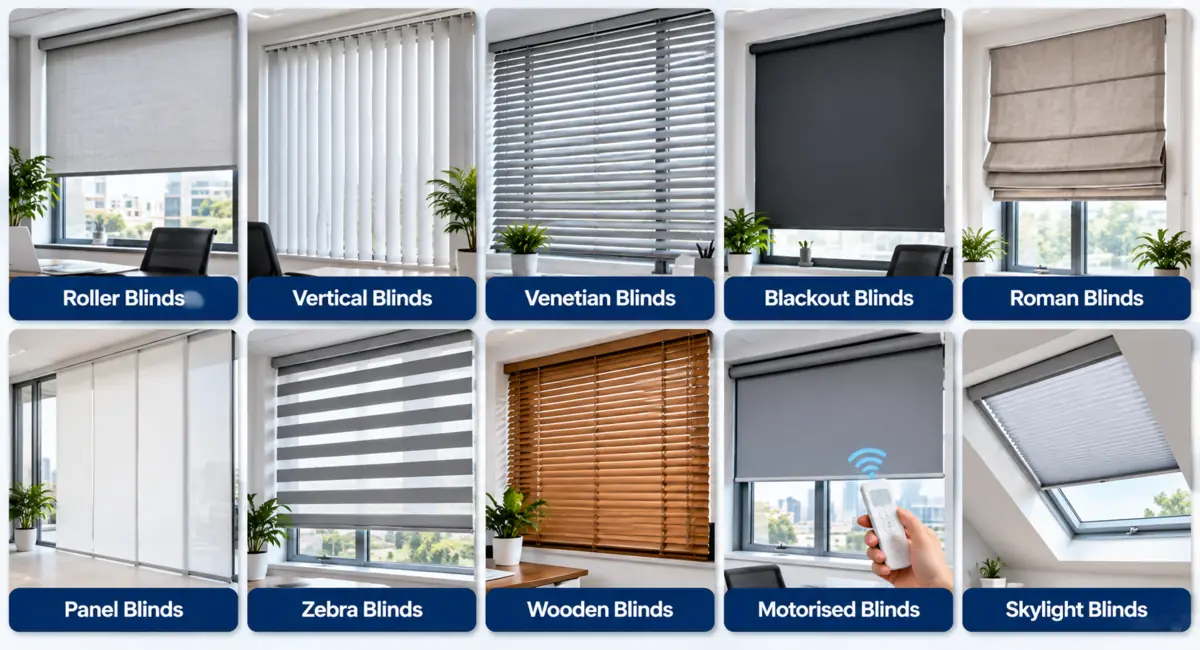
Depending on your window design and working conditions, there are various options available. Roller blinds are a great option as they are clean and simple. Vertical blinds can be ideal for large windows and glass partitions. Venetian blinds have horizontal slats that allow you to adjust the light to the exact amount. Decide if you would prefer these to be manual or motorized. Think about how often you would need to adjust the blinds and who will be using them. If your windows are easily accessible, then this may influence your decision.
Your blinds will be used frequently within your office, so it is important that they are made using high quality and durable materials. Using high quality fabrics and durable parts will ensure they don’t get worn out as quickly. In a busy workplace, consider choosing blinds made from easy to wipe materials that won’t build up too much dust. You may also want to consider moisture resistant materials if you are worried about humidity. Before purchasing, check the manufacturer’s guidelines for how much maintenance they will require.
It is important to get accurate measurements of your windows. If you get the measurements wrong it can cause gaps to appear which can impact the privacy of your office. Carefully measure your window and decide if you want your blinds to be mounted inwardly or outwardly. Check if there are any handles, vents or desks which may hinder the blinds. If you have large glass windows or unusual shapes, we would recommend having professional measurements taken and fitting to ensure your blinds fit securely and neatly.
Solar gain can cause an increase in temperature within an office space. Ensuring you use the correct type of blinds will help with reducing solar gain. If your windows are getting a lot of direct sunlight having reflective or solar control fabrics may be useful. Using blinds can reduce the heat from entering the building which can therefore make air conditioning more efficient. This will depend on the type of glazing, fabric and installation you have. Choose an option that will give you the correct balance between temperature control and natural light.
Office blinds can be a great addition to your office space by complementing your furniture, wall colour, flooring and brand. Neutral tones like white, beige and grey work well in many professional environments. Darker colours will give you a more defined look. If your workplace sees regular clients, having coordinated blinds will help you make a great first impression. Lighter tones can make small rooms feel more open. Having the same colour throughout multiple rooms will help create a more cohesive design.
When budgeting for blinds, you need to consider the extra costs of getting them measured, installed, operated, cleaned and repaired. A cheaper product may look like a good deal but if the materials aren’t great you’ll find yourself having to spend more in the long run. Try to compare the quality, guarantee, life expectancy and maintenance of the product. If you’re fitting blinds to multiple offices ask for a quote for all the windows. This will make it easier to compare and keep your overall costs under control.
Manual blinds are ideal for small offices with easily accessible windows. They tend to be easy to use and can be more affordable. However, motorized blinds offer a more convenient option, particularly if you have meeting rooms, large offices or large/ difficult to reach windows. Some are able to be controlled together or remotely. Before purchasing a motorised blind, make sure that it is appropriate for your workplace by checking how much power it requires, and whether it will fit and require servicing.
Ensure you choose a blinds option that is appropriate for your staff and a commercial setting. Ensure they are high quality to prevent damage over time and that they have a safe operation system. Choose a cordless or secure cord system to limit any risks. If you have children in your workplace then this is especially important. Ensure that you meet any fire safety requirements especially if you are fitting blinds in a large office or commercial building. Check with your supplier to ensure you meet any specific requirements.
Fill out our online enquiry form so we can give you a call and talk through your office blinds needs.
“The best office blinds combine perfect light control with professional style and effortlessly transform distracting glare into a focused and productive workplace.” Interior Designer, Dubai
“Selecting the right blinds can help to control natural light to optimize employee comfort, privacy and productivity in your workspace.” Interior Designer, UAE
